Selling on Amazon means your inventory must always be in stock. If an Amazon product goes out of stock, a number of negative consequences occur such as losing sales and rankings, and customers begin purchasing from competitors. It may take some time to begin selling at your previous levels. If inventory is overstocked, this creates additional storage costs that reduces income from sales and also causes other negative consequences. A successful FBA inventory management system leads to less stock-based costs, more customers, and more sales every month of the year.
This guide shows you how to implement new strategies to ensure you are never out of stock, plan your inventory better, and ensure you are always making sales.
Why Inventory Management Is Important for Amazon Sellers?
Inventory management affects almost every part of your Amazon business.
When your inventory is managed properly, you can:
- Avoid losing sales from stock sell out
- Avoid overstock storage fees
- Maintain the Buy Box
- Foster customer loyalty with greater trust
- Maintain consistent product rankings
- Eliminate cash flow losses
- Plan inventory for seasonal demand
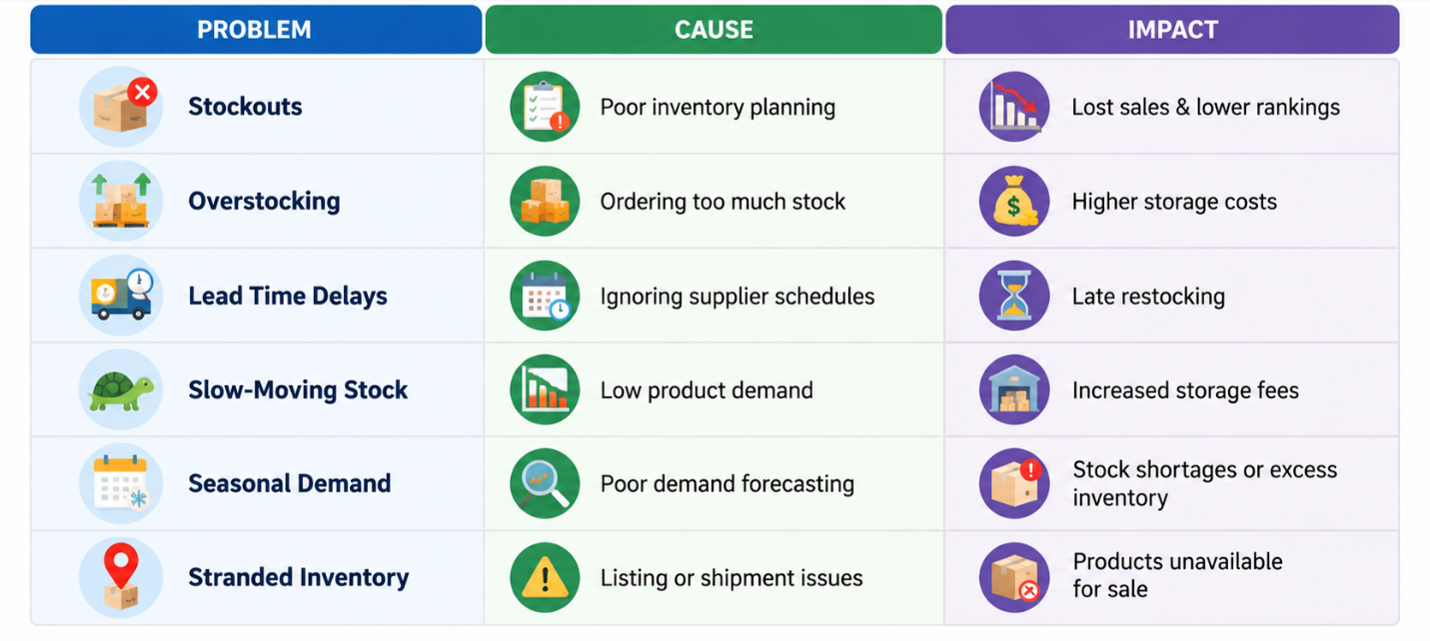
Common Inventory Problems Amazon Sellers Face
Many sellers experience inventory challenges because they rely on estimates instead of real data.
Some of the most common problems include:
Ways to Prevent Stockouts, Maximize Sales Efficiency, and Keep Your Best-Selling Products Always Available
The proper inventory approach prevents you from losing sales opportunities, improves your sales performance, and makes sure your top-selling items are available year-round. Here are some effective techniques to optimize your Amazon FBA inventory.
1. Predict Future Demand Based on Past Sales
The best way of preventing a stock-out situation is to predict demand. Analyzing your sales history enables you to make the best estimates on the amount of stock to order when making your purchase requests.
What to consider:
- Sales on a daily basis
- Trends on a weekly basis
- Demand on a monthly basis
- Changes on a seasonal basis
- Promotions
- Holidays
2. Conduct Periodic Inventory Checks
The periodic checking of your inventory ensures you are aware of stock levels that negatively impact your sales. Inventory checks also help you ensure your inventory is ordered in a timely manner to keep your listings active.
Here are some metrics to help your inventory checks:
- Inventory that is available
- Inventory that is reserved
- Inventory that is on the way
- Rate at which inventory sells
- Days of inventory that is left
3. Order Inventory Based on Reorder Points
When you use reorder points to dictate the ordering of your inventory, you ensure that inventory is ordered before it sells out completely. Reorder points are determined by lead time of your supplier and average sales on a daily basis.
Example:
- Sales on a daily basis: 15 units
- Lead time of supplier: 30 days
Reorder point = 15 × 30 = 450 units
4. Use Trade Stock to Meet Unpredicted Demand
Stock can become depleted due to unanticipated demand. Trade stock helps you sell while waiting for new stock to come in.
Safety stock guards your company against:
- Delays from suppliers
- Delays from transports
- Delays from customs
- Unexpected demand
- Increase in sales during holidays
5. Think About Lead Time When Planning Inventory
Place orders in a way your customers will not notice a delay in delivery. To do this you have to understand your suppliers lead time.
This is the time taken to do the following:
- Manufacturing time
- Inspection time
- Shipping time
- Clearing customs
- Time taken by Amazon to receive and process
6. Work on the Quality of Your Inventory Prediction
The quality of your inventory prediction will dictate the flow of your purchases and your inventory stock.
It is imperative to have the following data to help you predict inventory better:
- Previous purchases
- Trends in the market
- Promotions
- New product launches
- Seasonal demand
- Competitive analysis
7. Anticipate the High Selling Seasons
Your sales will peak during major shopping events. Anticipate this and place inventory orders ahead of time.
Consider the following:
- Prime Day
- Black Friday
- Cyber Monday
- Christmas
- Back-to-school
- Holidays
8. Eliminate Inventory That Sells Slowly
Your Amazon storage fees will increase the more you stock items that have poor sales. Make room for items that sell faster by removing or promoting these items.
Consider the following:
- Coupons
- Discounts
- Promotions
- Advertising
- Combining items for sale
9. Utilize Amazon Inventory Performance Reports
Timely reports provided by Amazon will help your company assess performance and identify inventory issues. This will help you stock and sell the perfect inventory through out the year.
Consider the following metrics:
- IPI
- Sell through rate
- Excess inventory
- Aged inventory
- Restock recommendation
- Inventory age
10. Varied Supply Chains
Stockouts are more likely to occur when you are reliant on a single supplier. Having several suppliers means that you can keep inventory stocked.
A varied supply chain can help combat:
- Manufacturing delays
- Shipping issues
- A shortage of supply
- Breaks in production
This will align better with your headings:
- How to Avoid Stockouts
- Sell as Efficiently as Possible
- Always Have Fast Selling Inventory On Hand
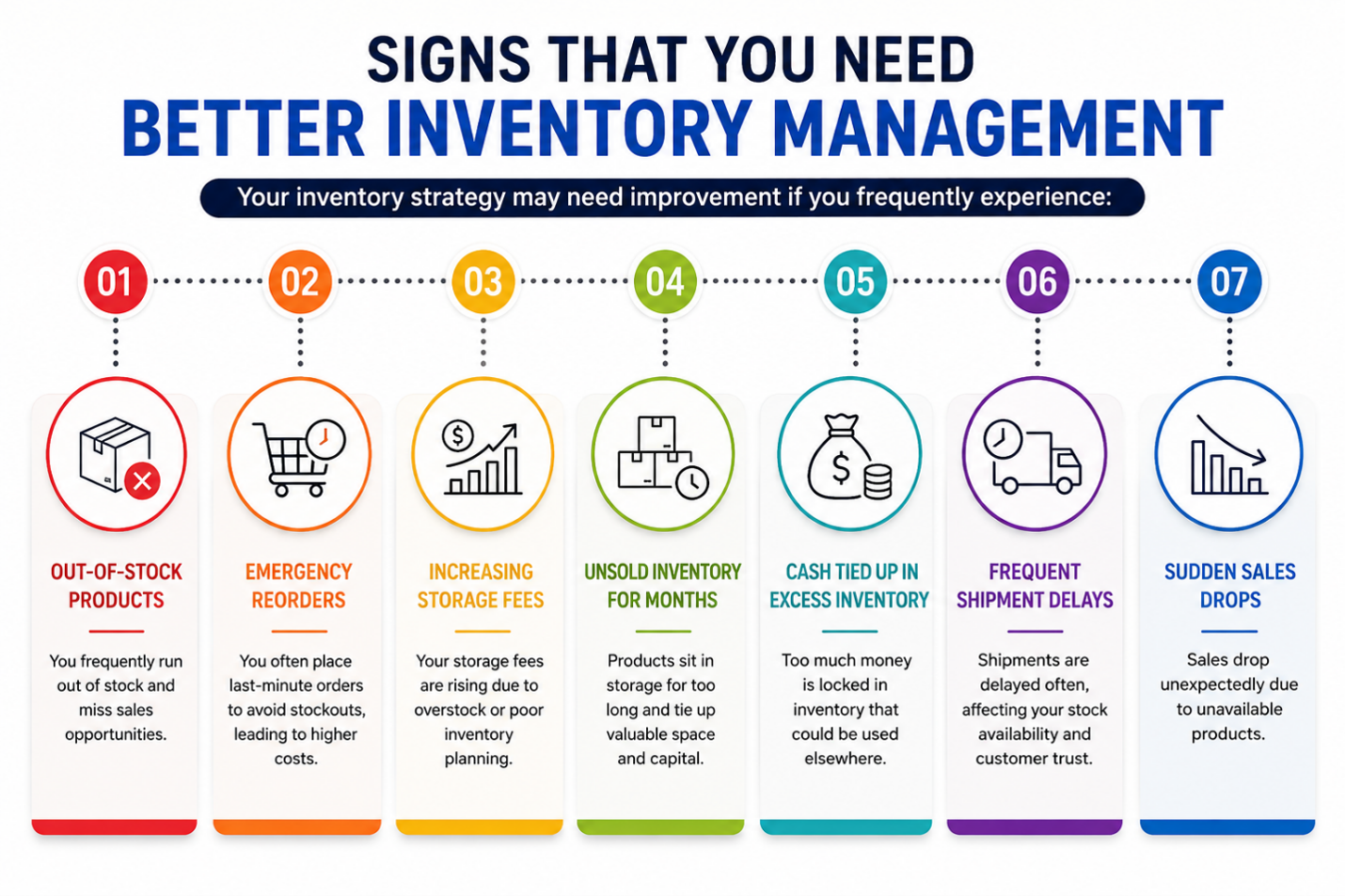
Signs That You Need Better Inventory Management
Your inventory strategy may need improvement if you frequently experience:
Inventory Reports Every Seller Should Monitor
Regularly check these reports:
- Inventory Health
- Restock Inventory
- Inventory Planning
- Inventory Performance
- Manage FBA Inventory
- Aged Inventory
- Excess Inventory
Common Inventory Management Mistakes to Avoid
Common Inventory Management Mistakes to Avoid
Avoid the following to keep your business safe:
- Late inventory orders
- Excess inventory
- Ignoring demand seasonality
- Relying on one supplier
- Lack of inventory report tracking
- Ignoring lead times
- Ignoring inventory that sells slowly
- Subpar sales predictions
- Insufficient safety stock
Final Thoughts
Amazon FBA inventory management deals with more than simply keeping product stock levels at zero. It focuses on having product inventory at the right levels, cost control, and market availability of products to buyers at the time of sale.
You can achieve Amazon sales optimization through the reduction of stockouts, thereby improving sales and efficiency, with protection of core sales products from interruptions. An effective and consistent inventory management strategy adds positive value to the customer experience and to Amazon business management throughput.